Step 14:46 video
How reselling works

Reselling is simple at its core. Buy things where they're cheap or overlooked, and sell them where people want them.
The short version
- Reselling means moving stuff from where it's cheap to where people want it.
- You don't need a warehouse or a big budget. Start with what's already in your house.
- The two things that matter most are demand and speed.
At its simplest, reselling is moving an item from somewhere it's cheap or overlooked to somewhere it has more demand. A movie sitting in a thrift store for a dollar can be worth $30 to the right buyer online. Your job is to connect the two.
You don't need a warehouse, a big budget, or a complicated plan. I tell beginners to start with their own house. Old books, movies, games, and electronics are a free way to learn how listing and shipping work before you spend a dollar on inventory.
Every good flip comes down to four skills:
- Pick items that actually sell, instead of guessing.
- Buy at a price that leaves room for profit.
- List clearly so buyers trust what they're getting.
- Ship quickly and consistently once something sells.
If you remember one thing from this lesson, make it demand and speed. Demand tells you whether people actually want the item. Speed is how fast you can decide, list, and move on. Reselling isn't a get-rich-quick trick. It's a skill, and it gets easier every time you make a call and see what happens.
Try the math
What you actually keep on a flip
eBay fees$4.14
You keep$14.36
Uses eBay's 14.95% fee for books, movies, and music, plus the per-order fee. Flippr runs this math on every item you scan, using real sold prices.

Dane's tip
Before you buy anything, list three things you already own. You'll learn more from those three listings than from a week of watching videos.
Common questions
How much money do I need to start reselling?
You can start with $0 by selling things you already own. Once a few of those sell, use that money for your first sourcing trip. $20 to $50 is plenty for a first thrift store run.
How much can I actually make reselling?
It depends on how much time you put in and what you sell. A few good flips a week can add up to real extra income, and some people grow it into a full-time business. For real numbers, see our breakdown of profit data from 9,146 Flippr sellers.
Step 23 min read
Get set up
Four things to have ready before your first sourcing trip. It takes about 15 minutes.
The short version
- A free eBay account.
- Flippr on your phone, so you can check prices before you buy.
- A small budget, or $0 if you start with your own stuff.
- One bin or shelf for your inventory.
- 1
Create a free eBay account
eBay has the most buyers, which is why I tell beginners to start there. Sign up, add a way to get paid, and you're ready to list.
Start selling on eBay - 2
Get Flippr on your phone
You'll use it in step 3. Point your camera at a shelf, a stack, or a single item, and it shows what each one actually sold for, how often it sells, and whether it's worth buying. New accounts get free credits to try it.
- 3
Set a starting budget
Start with what's already in your house. When you're ready to buy, $20 to $50 is plenty for a first trip. Put your first profits back into inventory instead of adding more of your own money.
- 4
Pick one spot for inventory
One bin or one shelf is enough. Keep everything you plan to sell in one place so nothing gets lost when it sells.
Dane's tip
Don't buy shipping supplies yet. Your first few sales can go out in boxes and mailers you already have, and USPS can print the label for you from a QR code at the counter.
Common questions
Do I need Flippr to follow this guide?
No. You can do everything here with the eBay app and some patience. Flippr makes the research part much faster, especially when you're looking at a whole shelf instead of one item.
Is Flippr free?
Downloading it is free, and new accounts get free credits to try scanning. If you end up using it a lot, there are paid plans in the app.
Step 311:41 video
Find your first flip
You make money when you buy. This step is about finding good items, and knowing they're good before you pay.
The short version
- Start at home, then try thrift stores, garage sales, and flea markets.
- Look at what items sold for, not what people are asking.
- Buy things that sell often, not things that sold once.
A good flip needs two things: a good item and a good price. That's why I say you make money when you buy. If you overpay, no listing trick will save you.
Here's where I'd look:
- Your house. The lowest-risk place to practice.
- Thrift stores. Steady inventory and random underpriced finds.
- Garage and yard sales. People want things gone, so prices are low.
- Flea markets. Lots of sellers in one place, and prices are negotiable.
- Facebook Marketplace and Craigslist. Good for local bulk deals.
Before you buy, check what the item actually sold for. Anyone can list a DVD for $80. What matters is what buyers paid. These are the numbers I look at:
- Average sold price: what similar items actually sold for.
- Active listings: how many other sellers you're up against right now.
- Sell-through rate: how often it sells compared with how many are listed.
- Recent sales: something that sold 30 times is easier to move than something that sold once.
If you don't know where to start, start with movies. DVDs and Blu-rays are everywhere, cheap to buy, and easy to ship, and some overlooked titles go for $30, $40, even $100 or more. Just make sure the right disc is inside and it isn't badly scratched.
Dane's tip
Google Lens is great for figuring out what something is. It's not a pricing tool. For value, check sold listings on eBay or scan it in Flippr.
Common questions
What's the best thing to resell as a beginner?
Media: DVDs, Blu-rays, books, video games, and CDs. They're easy to find, cheap to buy, simple to ship, and there's plenty of sold data to check against. Once you've done a few flips, branch out.
What's the difference between sold and active listings?
Active listings are what sellers are asking. Sold listings are what buyers actually paid. Always price from sold listings. On eBay, filter your search results to show sold items.
What's a good sell-through rate?
Higher is better, and sample size matters. 60% sell-through across hundreds of sales means a lot more than 60% across five. When you're starting out, favor items that sell often.
Go deeper
Step 47:50 video
List, sell, and ship
Clear photos, an honest description, and a fair price. Then ship it fast.
The short version
- List on eBay first. It has the most buyers.
- Photograph everything, including the flaws.
- Use Buy It Now and price from recent sold listings.
- Ship within a day or two. Media Mail for books, movies, and games.
Local apps like Facebook Marketplace skip the fees, but you only reach people nearby. eBay reaches buyers everywhere, so things usually sell faster. That's where I'd list your first items.
The quickest way to list on eBay is to find a sold listing that matches your item and use Sell one like this. It fills in most of the details for you. Keep the title simple and accurate, using the words a buyer would search for.
Good photos build trust. A phone camera, bright light, and a plain background like white poster board are enough.
- Shoot from several angles.
- Show tags, labels, and model numbers.
- Show every scratch, scuff, or missing piece.
- Test it if you can, and say whether it's tested or untested.
Use the average sold price as your starting point, then decide how fast you want it gone. Pricing a little under average sells faster. For most beginner flips, Buy It Now is simpler than an auction, and accepting offers helps move things that sit.
Keep shipping simple:
- Start with basic supplies: boxes, poly mailers, bubble wrap, and tape.
- Use USPS Media Mail for books, movies, and games when they qualify. It's usually the cheapest option.
- Use USPS Ground Advantage for most other small items.
- No printer? Choose the QR code option and USPS prints the label for you.
Where to sell
eBay
Best for
Almost anything you can ship. Start here.
Fees
13.6% of the sale for most items (14.95% for books, movies, and music), plus a small per-order fee.
Facebook Marketplace
Best for
Big or bulky items and quick local sales.
Fees
No fees on local pickup, but you only reach nearby buyers.
Whatnot
Best for
Selling live, once you have plenty of inventory in one category.
Fees
8% commission on most items, plus payment processing.
Fees checked July 2, 2026.
Dane's tip
Be more upfront about condition than you think you need to be. Clear photos of every flaw prevent returns and bad feedback.
Common questions
Should I sell on eBay or Facebook Marketplace?
Both, for different things. eBay for anything you can ship, because it reaches the most buyers. Facebook Marketplace for big items and quick local sales with no fees.
How do I know what to charge?
Look up recent sold listings for the same item and use the average as your starting point. Price a little lower if you want it gone fast.
What's the cheapest way to ship?
For books, DVDs, CDs, and video games, USPS Media Mail is usually cheapest. For most other small items, use USPS Ground Advantage. Buying the label through eBay usually costs less than paying at the counter.
Go deeper
Step 55:20 video
Make it a routine
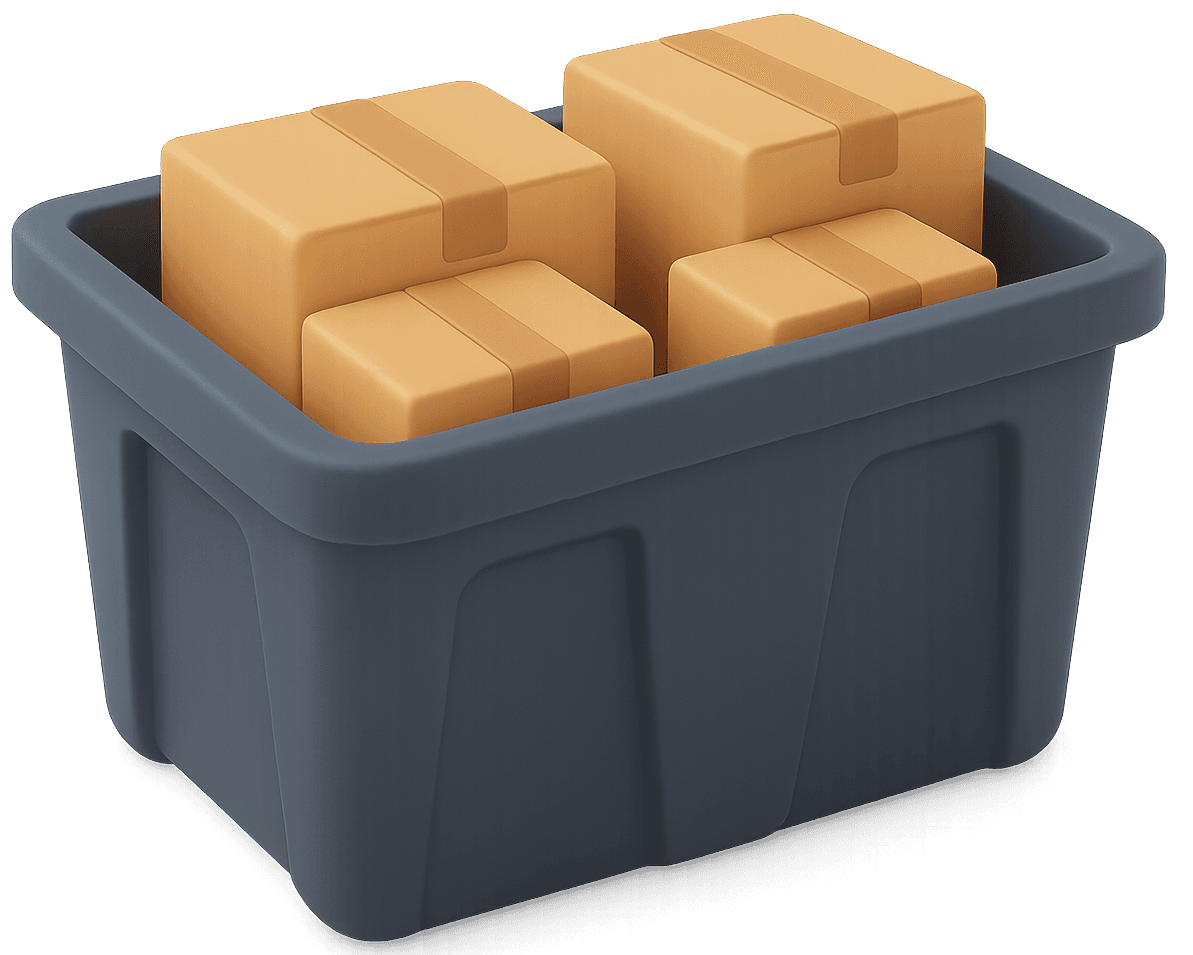
One lucky flip is fun. A simple weekly routine is what turns it into real money.
The short version
- Give every item a home: labeled bins, and a bin for each listing.
- Keep about one to two weeks of unlisted inventory. More than that is clutter.
- Source from a few spots you can repeat.
- Try two days sourcing, three days listing, and shipping every weekday.
Scaling isn't just buying more stuff. It's staying organized enough to keep listing, storing, and shipping without falling behind. If you can't find an item quickly after it sells, your system is broken.
- Use cheap bins, totes, or boxes.
- Label them clearly: A1, A2, B1, B2.
- Assign each item to a bin when you list it.
- Keep notes so you know what's stored where.
Inventory you haven't listed is just clutter. A good rule is to keep about one to two weeks of unlisted inventory: enough to work through, not so much you're drowning in piles. If reselling becomes real income, think about runway too. How long could you keep listing if you stopped sourcing today?
Consistent small wins build a stronger business than chasing one big score. Pick a few sourcing spots you can repeat:
- A few reliable thrift stores you rotate through each week.
- Facebook Marketplace bulk lots, checked on a schedule.
- A garage sale or estate sale route.
- Notes on which spots actually make you money, not just which ones are fun.
Then give yourself a rhythm. Something like two days sourcing, three days listing, and shipping every weekday. Steady work beats big bursts that fade after a week.
Dane's tip
Track profit by spot. After a month you'll know exactly which stores are worth your Saturday.
Common questions
How much inventory should I keep on hand?
About one to two weeks of unlisted items. If the pile keeps growing, source less and list more.
How often should I go sourcing?
Pick a schedule you can actually keep. Two days a week is plenty for most people starting out.
Go deeper
Finish line
Your first-flip challenge

Do this in the next seven days. That's how this turns from videos you watched into money in your account.
0 of 6 done. Your progress saves on this device.
Get the app
Scan your first shelf tonight. The video lessons are in the app too.

A note from Dane
Why I made this guide
Most people don't quit reselling for lack of effort. They quit because they don't know what's worth buying, and guessing wrong a few times kills the motivation. The fix is simple: check demand before you buy, and keep moving.
Reselling is one of the most practical ways I know to start making money without a degree, a boss, or years of experience. It also gives useful things a second life instead of sending them to a landfill. That's why we built Flippr, and it's why this guide is free.
Dane CollinsFlippr co-founder
More questions
Is Reseller Academy free?
Yes. Every lesson on this page is free, and the video lessons are also inside the Flippr app. You don't need to buy anything to follow along.
Is reselling legal?
Yes. Buying things and reselling them is legal. Stay away from counterfeits, recalled products, and anything a marketplace doesn't allow.
Do I have to pay taxes on reselling income?
Generally, yes, on your profit. Marketplaces may send you a tax form once you pass certain sales levels. Keep a record of what you paid for each item so you're taxed on profit, not total sales, and ask a tax professional about your situation.
How long until I make my first sale?
It depends on what you list and how you price it. Items with lots of recent sales and a fair price often sell within days. Items with few sales can take weeks.
